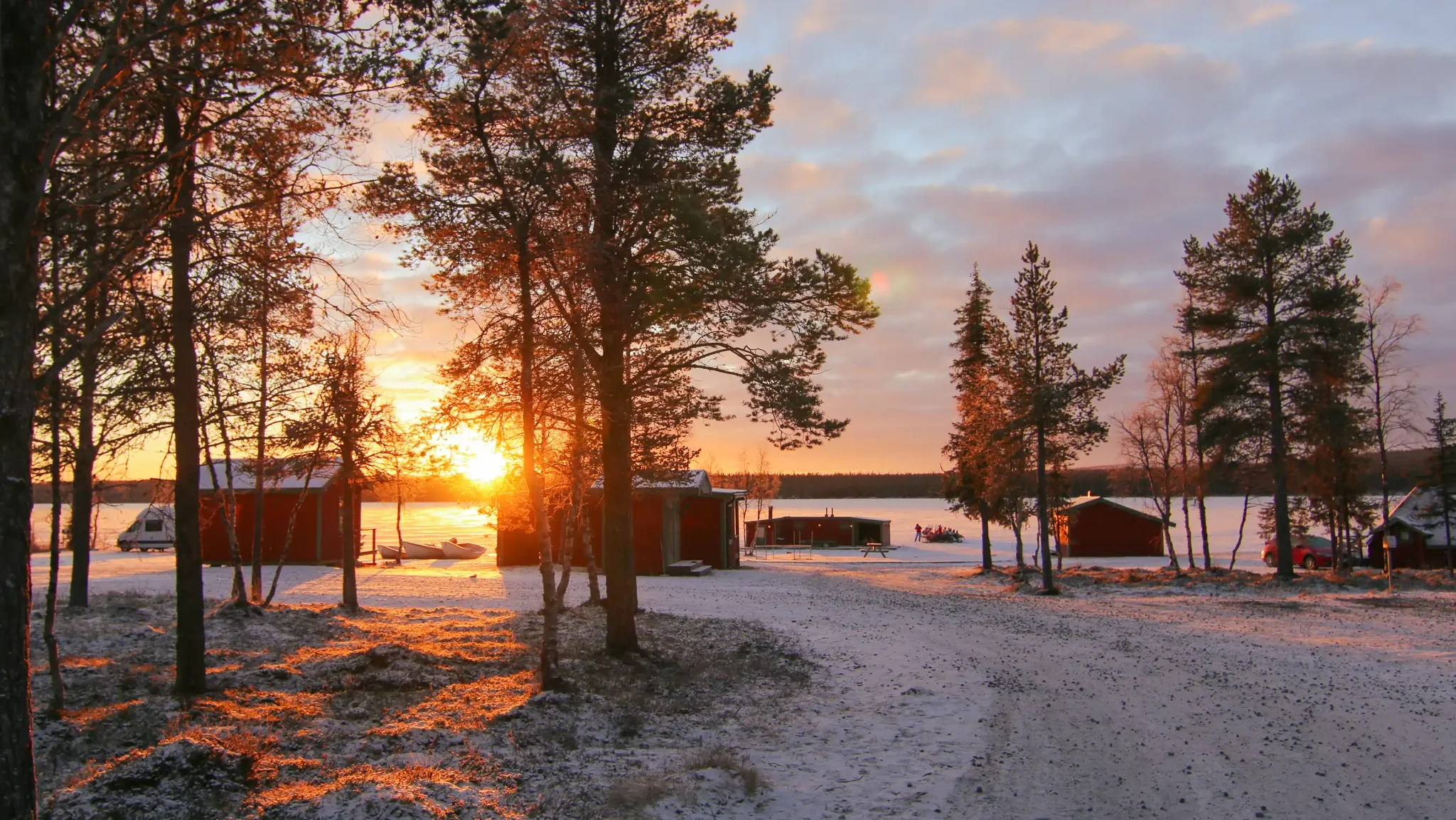
The problem
Under new ownership, Camp Alta had 18 cabins, a communal kitchen, and shared toilet and shower facilities with no shared identity, poor guest privacy, and interiors that had no real connection to the seasonal Arctic landscape surrounding them. The experience guests got depended on which space they were in and who had last looked after it. The site relied partly on volunteers, so when people left, they took the knowledge with them and nothing was in place to fill that gap.
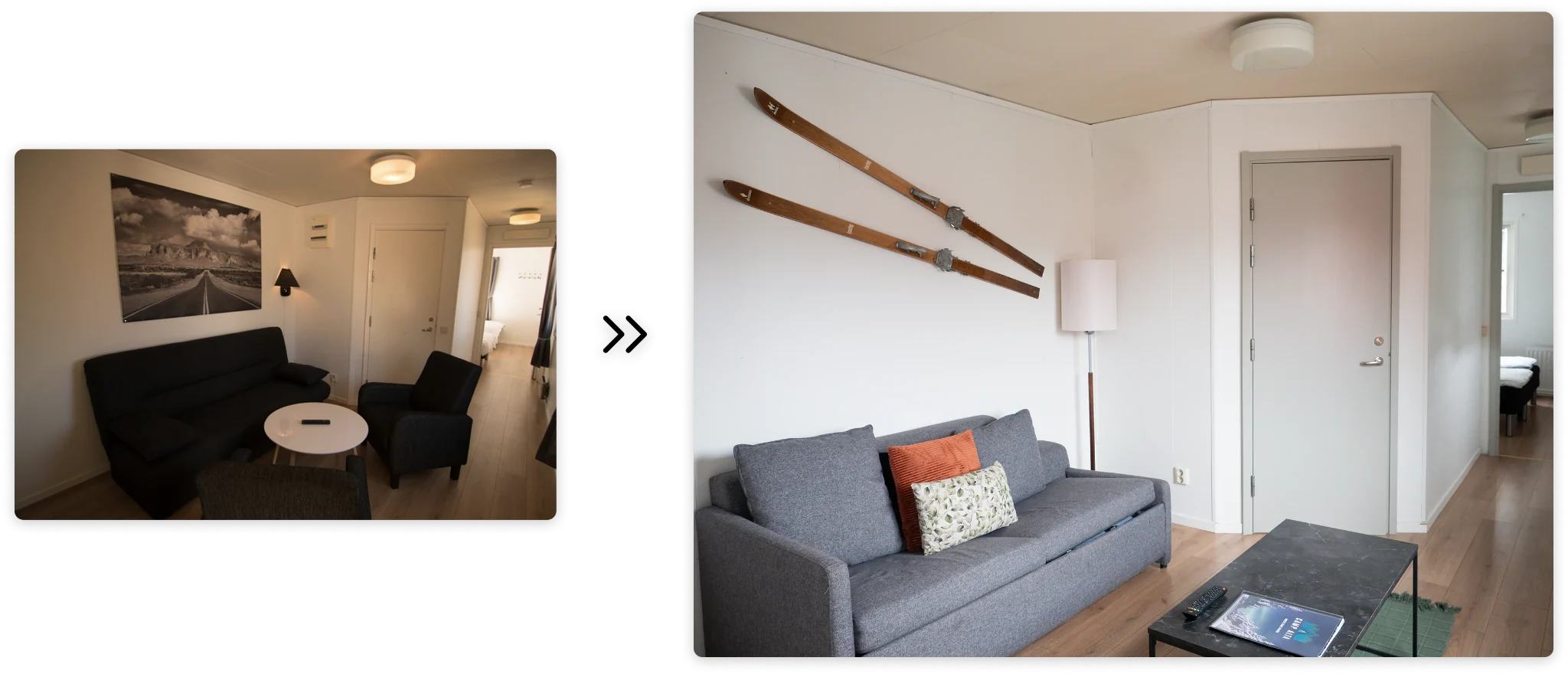
Living room before and after: new material palette, vintage skis, nature-connected feel
The design
A single interior system applied across all spaces, grounded in the seasonal Arctic landscape.
Site audit and documentation baseline
No floor plans existed for the cabins, so these were created from scratch. All existing assets across the site were catalogued before any design decisions were made, establishing a baseline to work from and source against.
Shared palette, material direction, and layout logic
A consistent visual and material language across all spaces, tied to the Arctic setting.
Secondhand-first sourcing
Camp stock first, then secondhand finds, then salvage or upcycle, then new purchases only where reuse was genuinely not viable.
Placement and replacement documentation
Written and visual guidance for cleaning staff covering where everything goes and what to replace it with. Anyone working on the site afterward had a clear reference to work from, independent of who had been involved in the project.
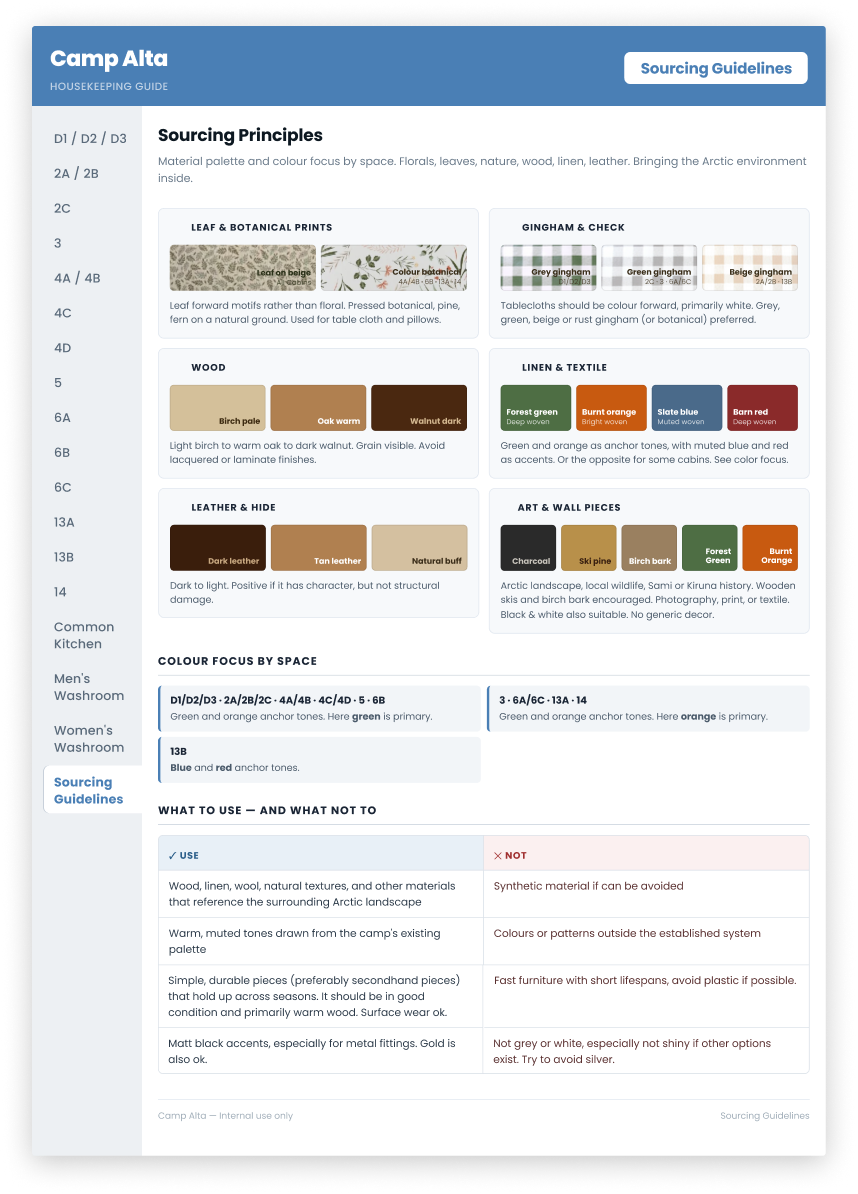
Documentation covering item placement and replacement, intended to hold the standard without relying on knowledge held by one person
The decisions
Treating the project as a repeatable system rather than individual renovations
Designing each space individually would have produced inconsistent results. Instead, a shared palette, material direction, and layout logic was defined once and applied across all spaces. With a low budget, active operations throughout, and sourcing that depended on what secondhand supply was available, a single coherent system wasn't just the better choice, it was the only one that could realistically work.
Making reuse the primary sourcing strategy
Reuse was a deliberate principle, not something the budget forced. Camp stock first, then secondhand finds, then salvage or upcycle, then new purchases only where reuse was genuinely not viable. Good secondhand finds can't be planned around, so sourcing stayed flexible and opportunistic throughout.
Treating documentation as a design output
The project started as a physical refresh. It became clear partway through that a well-executed interior would degrade quickly if the people maintaining it didn't know what was intended, so documentation was brought in as an equal priority rather than an afterthought. Anyone working on the site afterward had a clear reference to work from, and with volunteer turnover, that turned out to be as important as getting the spaces right in the first place.
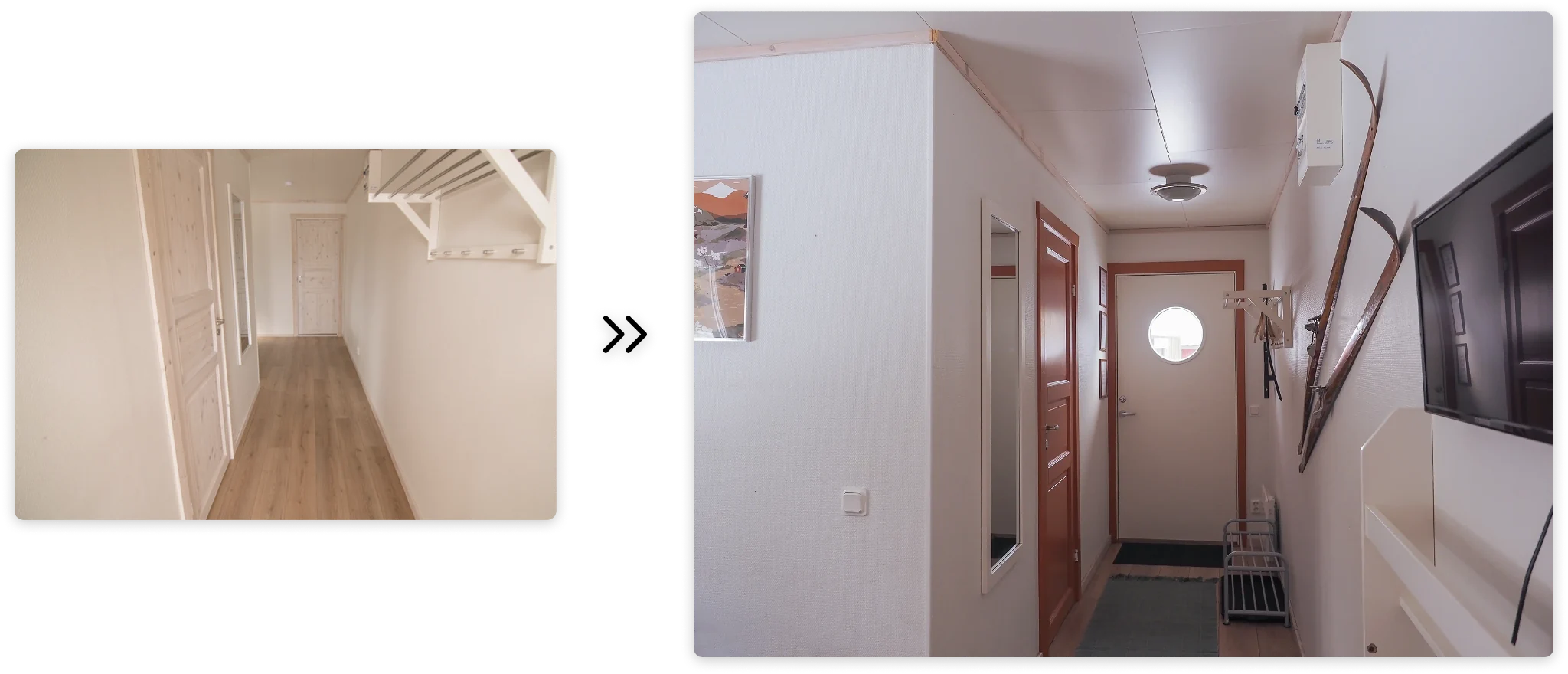
Corridor before and after: empty hallway given identity through skis, a mirror, and Arctic touches
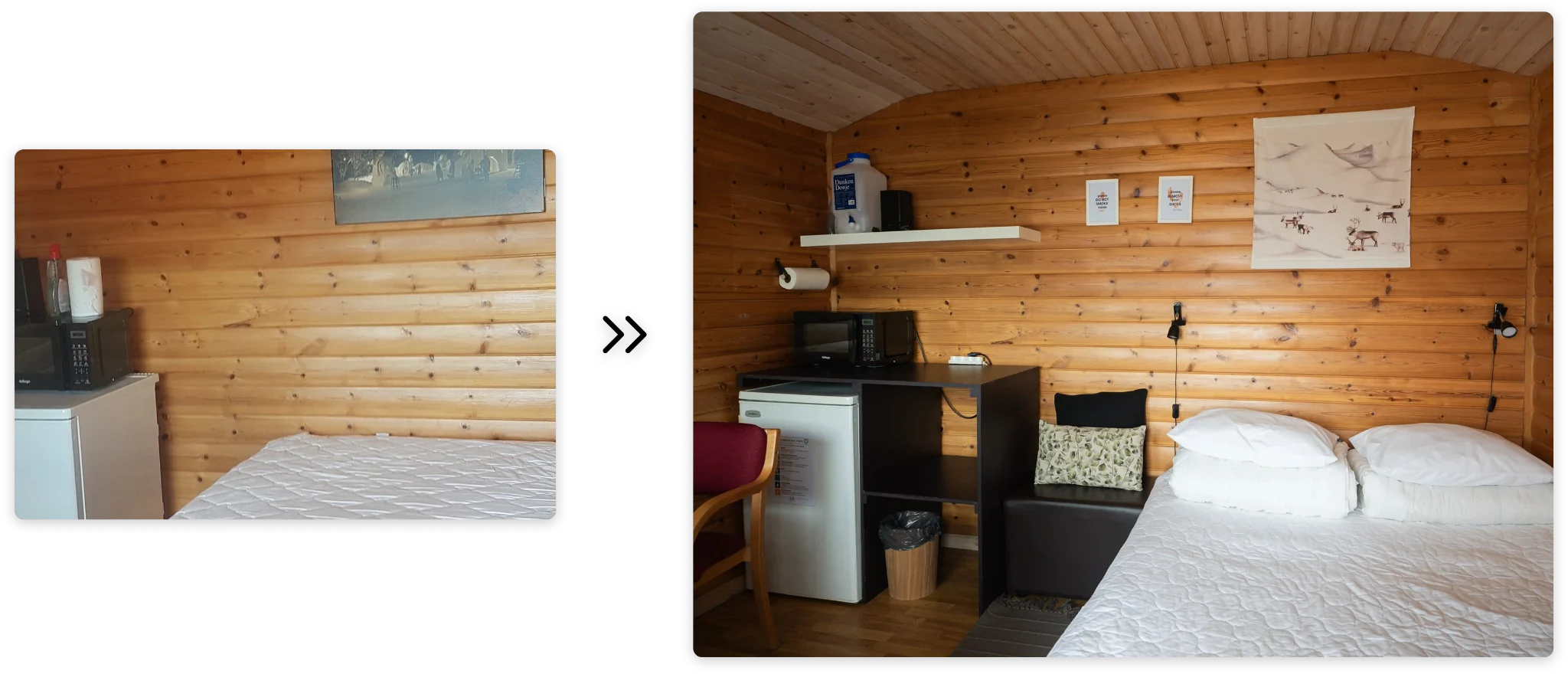
Cabin bedroom: reindeer print, warm shelf, materials tied to the Arctic palette
The results
All spaces refreshed with a consistent feel and stronger connection to the seasonal Arctic landscape. The documentation gave staff a shared reference for placement, replacement, and sourcing decisions, intended to hold the standard without relying on knowledge held by one person. The full refresh was completed without disrupting active bookings, by working through spaces in small phases around the booking schedule.
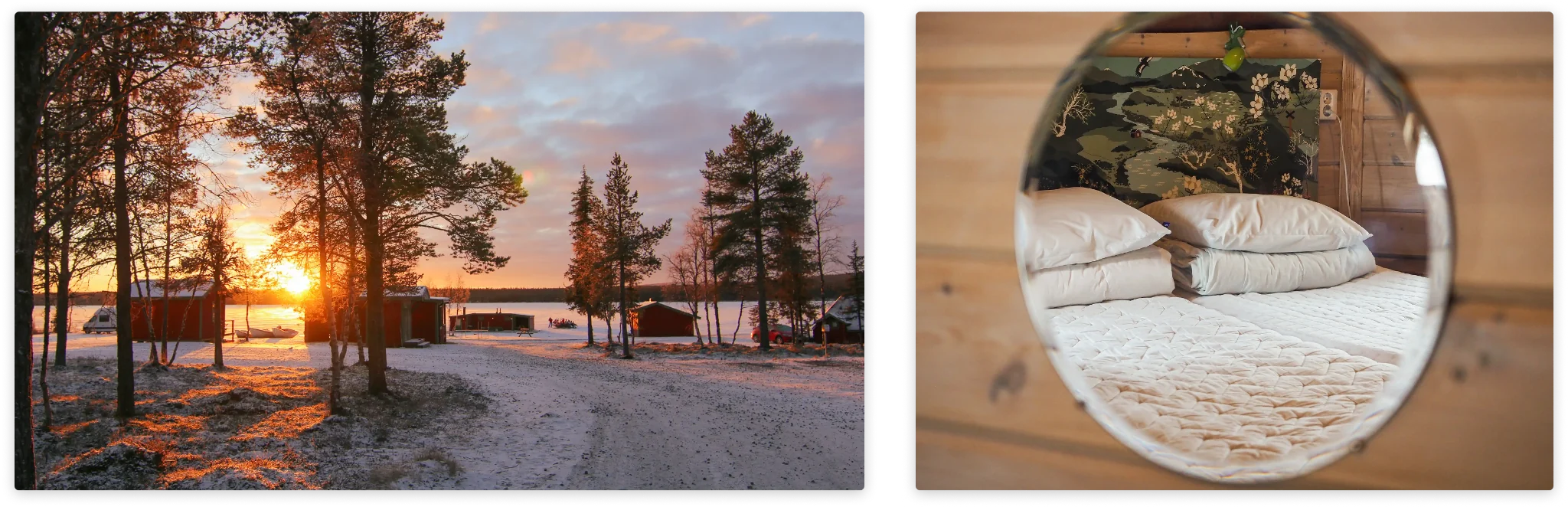
The setting that shaped the interior direction: birch forest, Arctic light, and winter landscape
The point
The constraint that shaped everything here was that the site never stopped operating. There was no clean window to work in and no reliable supply chain, so the design had to account for all of that from the start, not as a workaround but as part of the brief. That's what this project made clear. Designing for constraints and for handover both have to be part of the brief from the start, not added once the real work feels done.