Hi! I'm
AMELIE CHRISTIANSEN
· a multidisciplinary designer with a background in cognitive science and sustainable design
I'm drawn to problems where behaviour, practical constraints, and long-term consequences need to be understood together, and I tend to investigate where a system breaks before deciding what form the solution should take.
I work across UX, service design, and spatial and visual identity projects, and think clearly about why things are designed the way they are, not just how they look or function.
Bodil
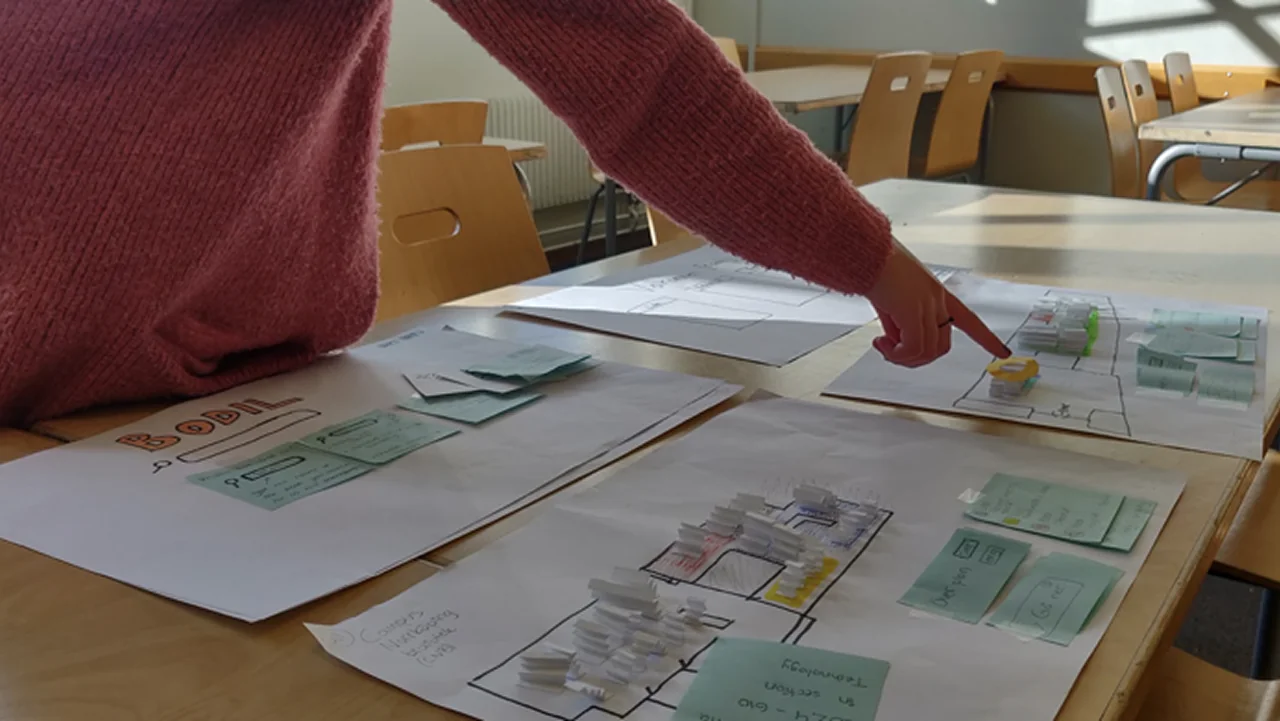
Students at Campus Norrköping library could find a book in the catalogue but kept failing to locate it once they got to the shelves.
A lo-fi prototype representing the full system, including the 3D digital map, in-library screen towers, floor guides, and colour-coded shelf sections, was tested with 5 participants. All participants located themselves on the map and found the correct shelf, the original failure point, with 100% task completion and an error rate of 0.2 against a benchmark of 0.7.
Lekcirkeln
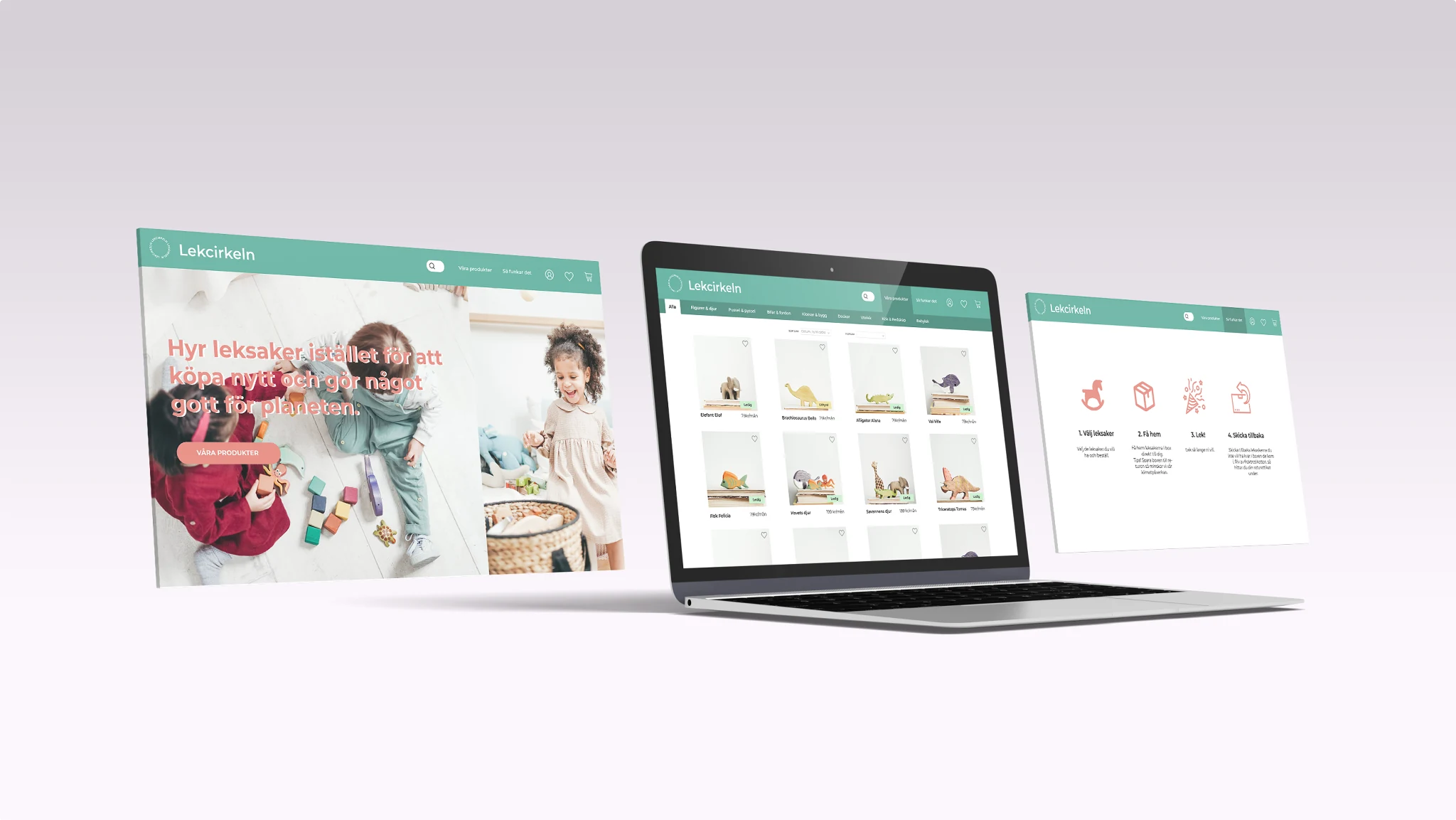
Families spend thousands on toys their children quickly abandon, but existing circular services hadn't made reuse easy or appealing enough to actually adopt.
A subscription toy rental concept evaluated through break-even analysis across three store models, with the hybrid model emerging as the only direction that met both financial and user constraints, alongside a repair loop and four-screen website mockups to communicate the service vision.
Second Order
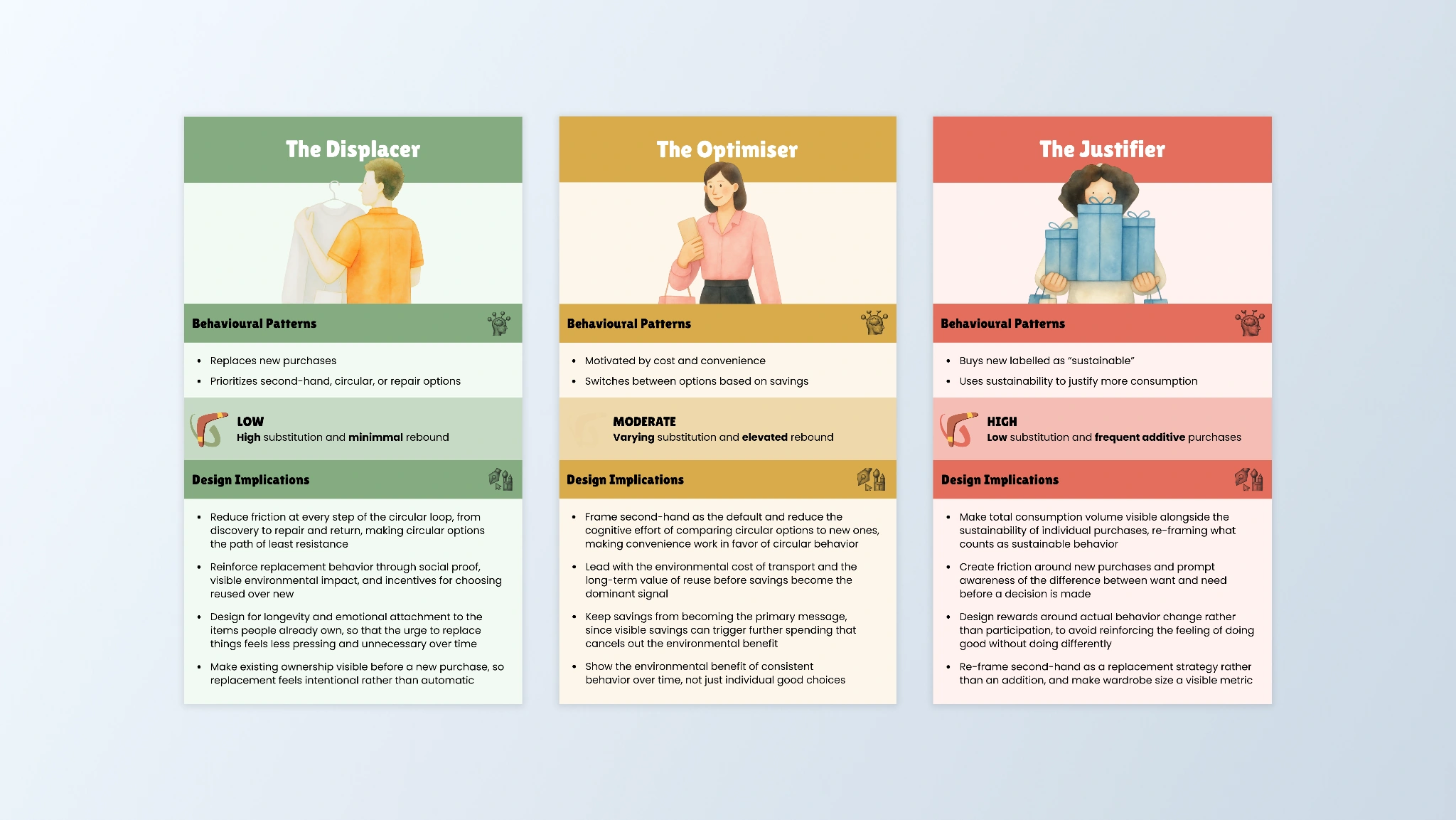
Second-hand clothing is widely assumed to be the most sustainable choice, but that assumption ignores how people travel to buy it, what they do with money saved, and whether it actually replaces a new purchase.
A behavioural framework with three consumer archetypes, built from environmental modelling across 36 scenarios, designed to help product and strategy teams identify where sustainability interventions work and where they don't.
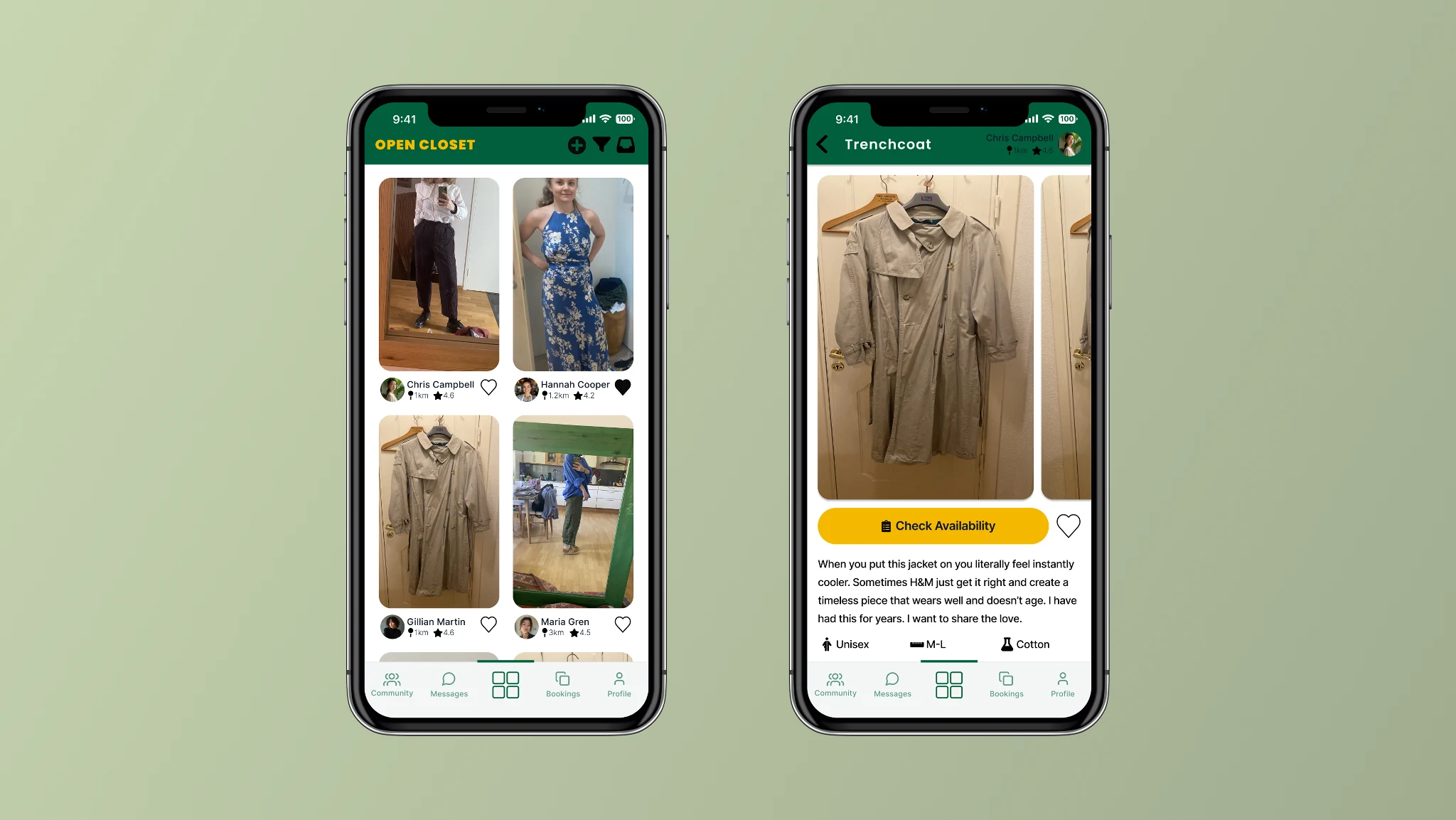
Open Closet
Borrowing clothes between people already happens informally, but there was no app that made it easy, trustworthy, or repeatable enough to build a habit around.
A 25-screen hi-fi prototype scoring 91.5 on the SUS, with 100% task success and 4 out of 5 participants saying they'd use it. The study also showed that interface design could support trust between strangers but couldn't resolve it alone, participants wanted clearer rules, accountability, and ways to build familiarity before lending to someone they didn't know.
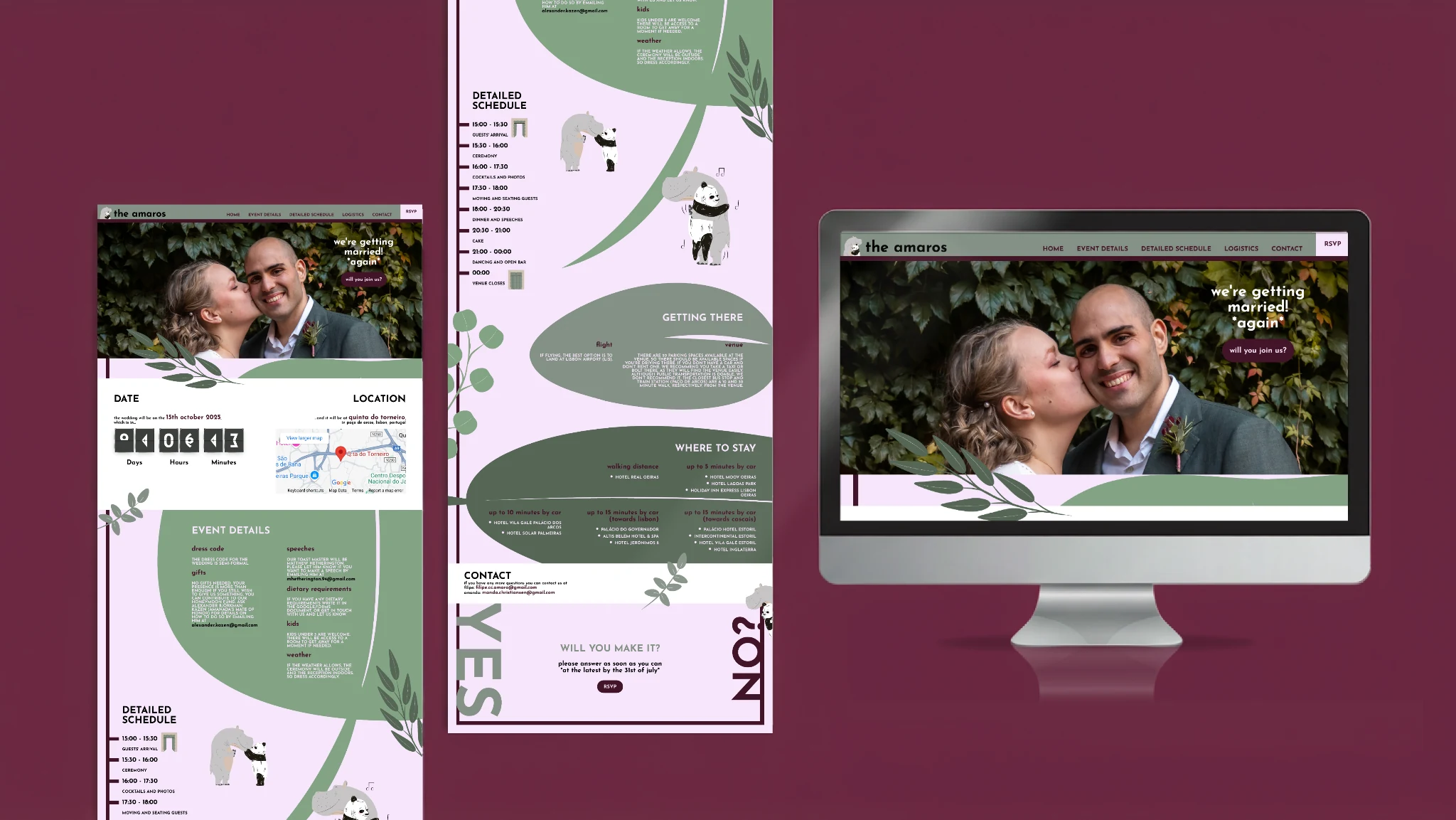
The Amaros
The couple wanted their wedding to feel like them, intentional and cohesive all the way through, not assembled from separate vendor decisions.
A visual identity system held consistently across 11 touchpoints, from the first Save the Date to what everyone wore on the day, described by the couple as "really feels like us."
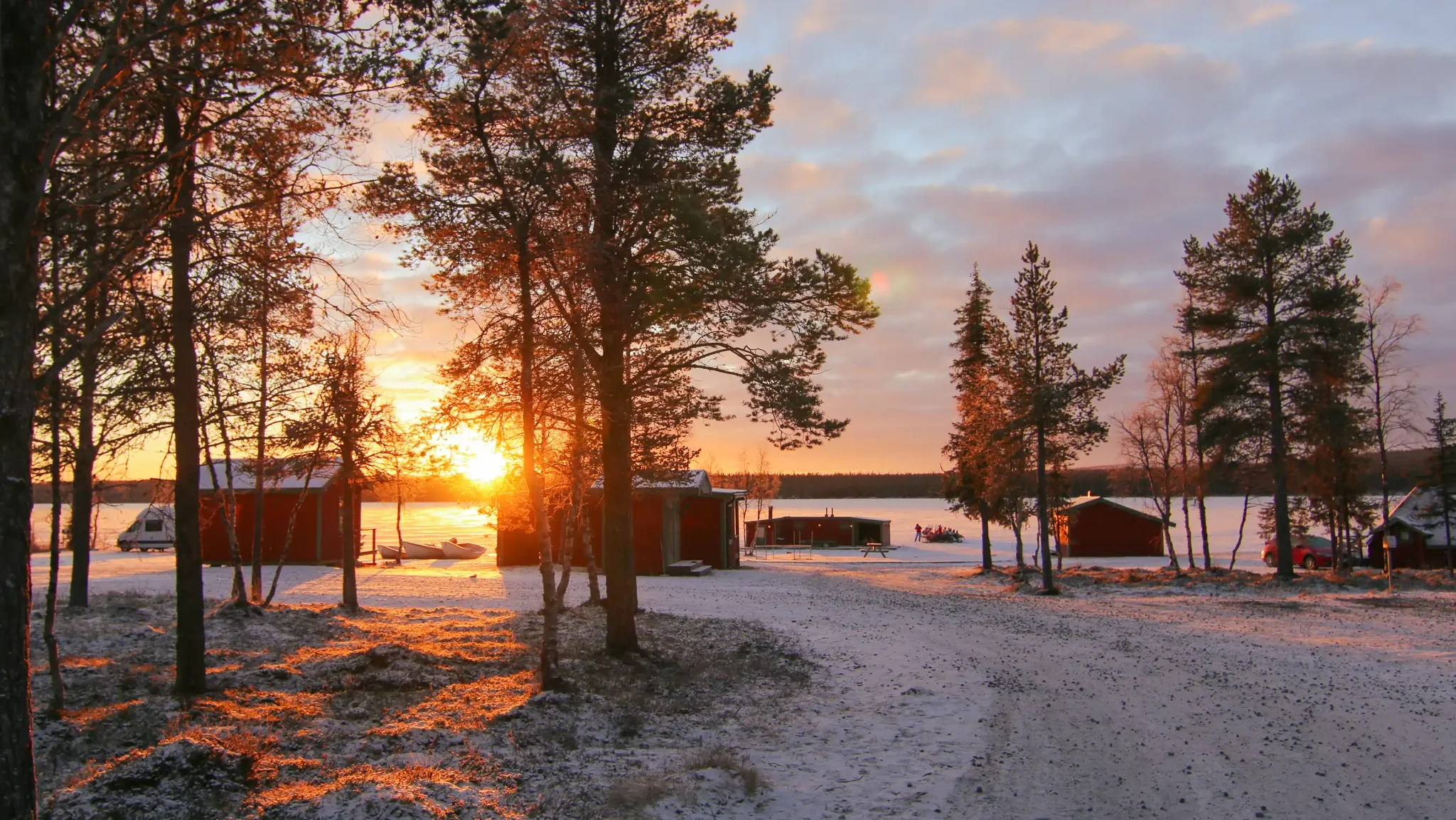
Camp Alta
A rental cabin site under new ownership had 18 cabins, a communal kitchen, and shared facilities with no shared identity, poor connection to the surrounding landscape, and no documentation to keep quality consistent when staff changed.
A repeatable interior system across all 18 cabins and shared facilities, with secondhand-first sourcing and documentation designed to hold the standard without ongoing design oversight.