The problem
Wedding visuals can easily end up feeling assembled rather than intentional, with each vendor working from their own templates and each touchpoint designed in isolation. The clients wanted something that felt like them all the way through, from the first communication to the day itself, across digital, print, and physical formats at the same time.
The design
A unified visual identity system applied consistently across every touchpoint.
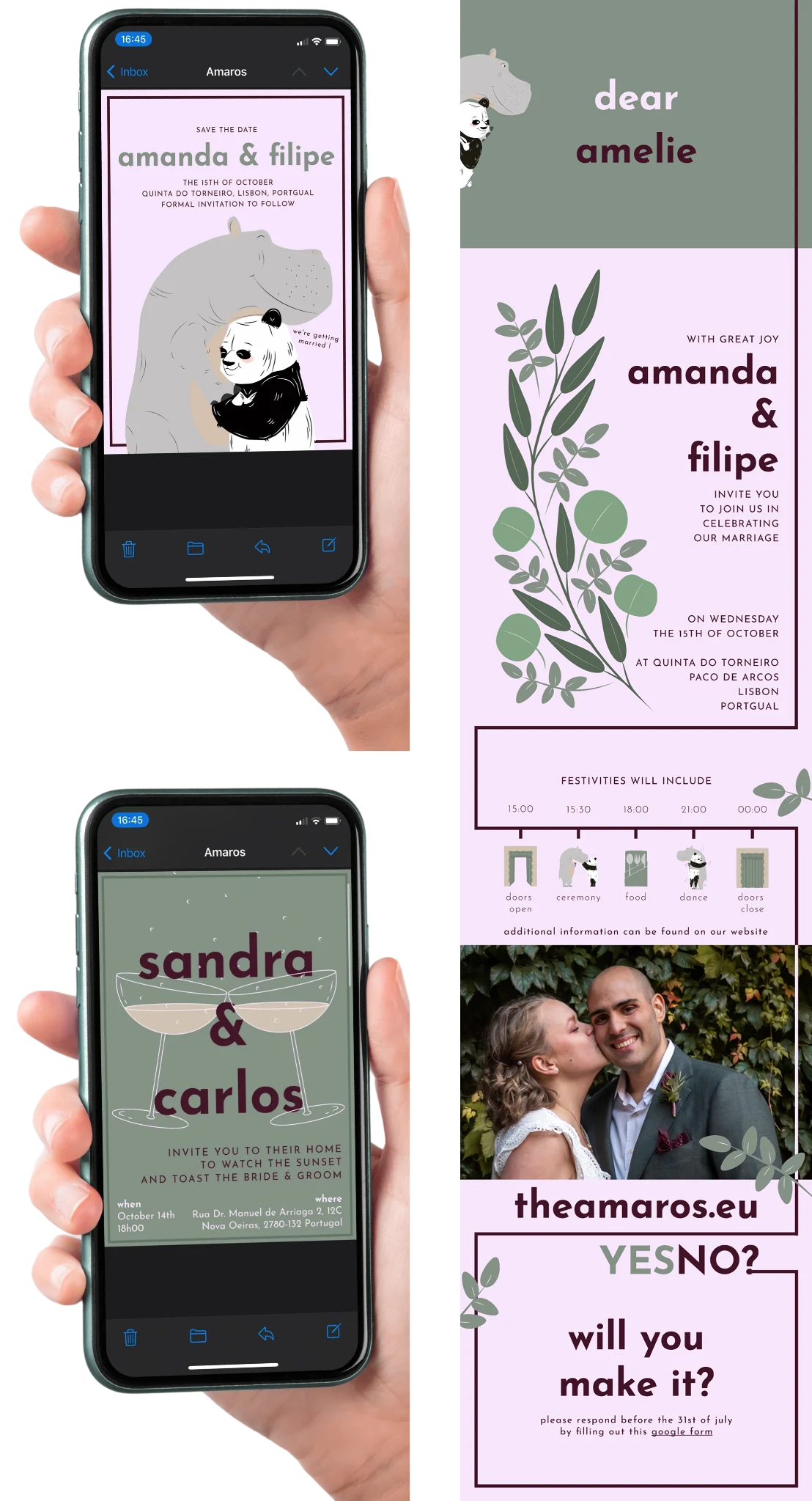
Digital invitations
Save the Date, Wedding Invitation, and Cocktail Hour, all built within the same identity system.
Digital invitation suite
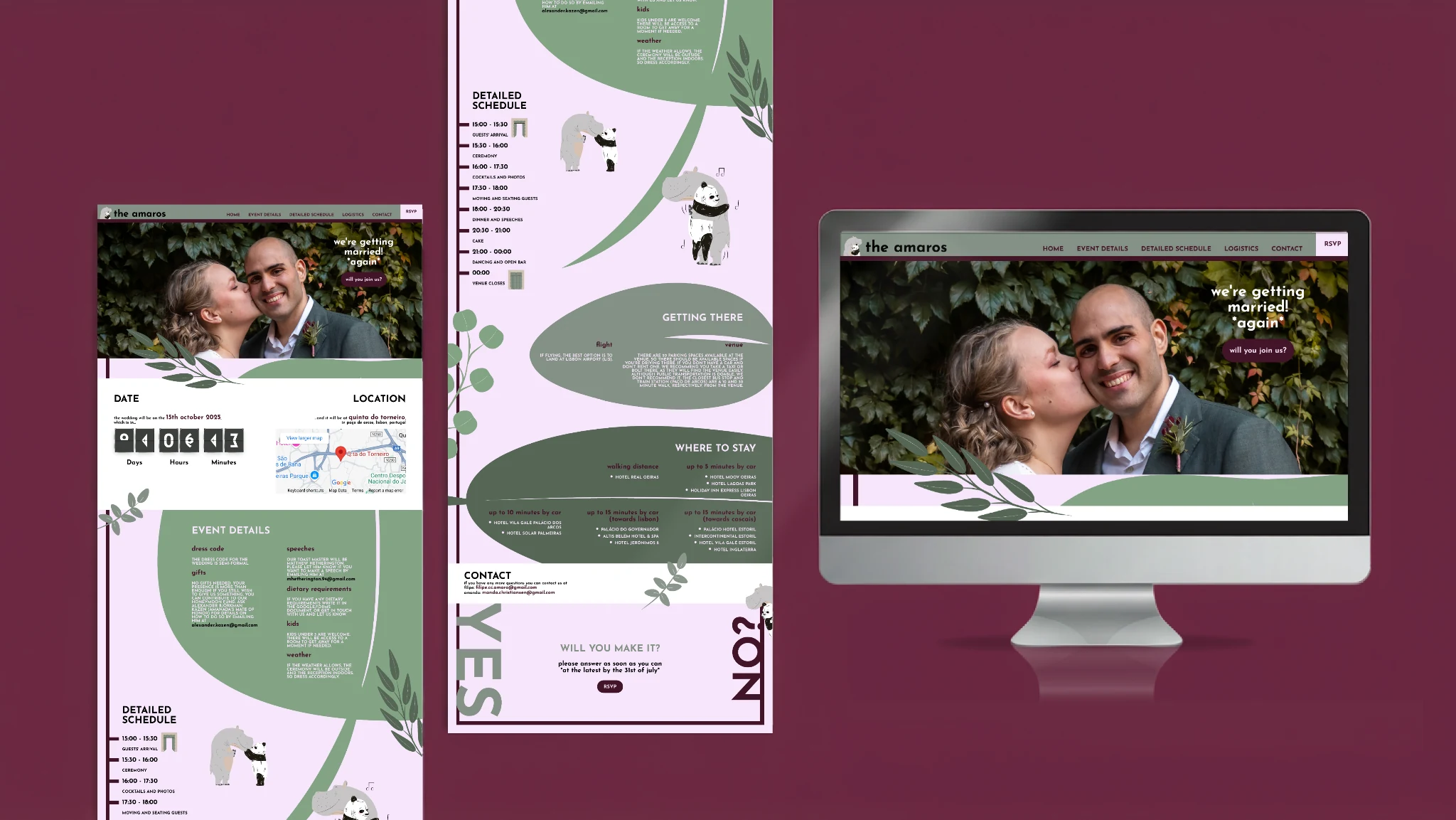
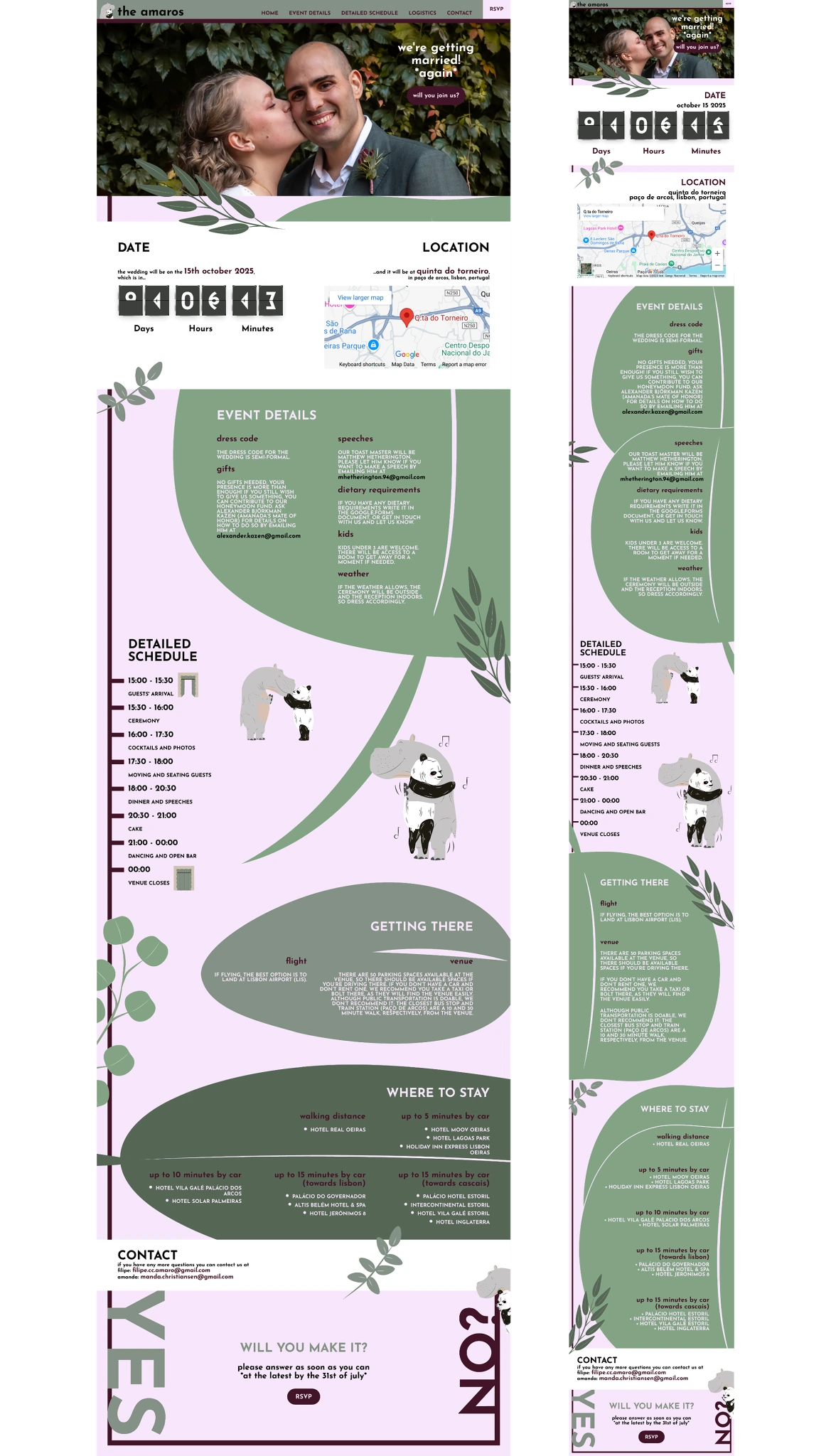
Wedding website
The website skeleton was built directly, with additional functionality handled by an external developer. Once development was complete, small positioning and layout adjustments were made to bring the result in line with the intended design.
Wedding website
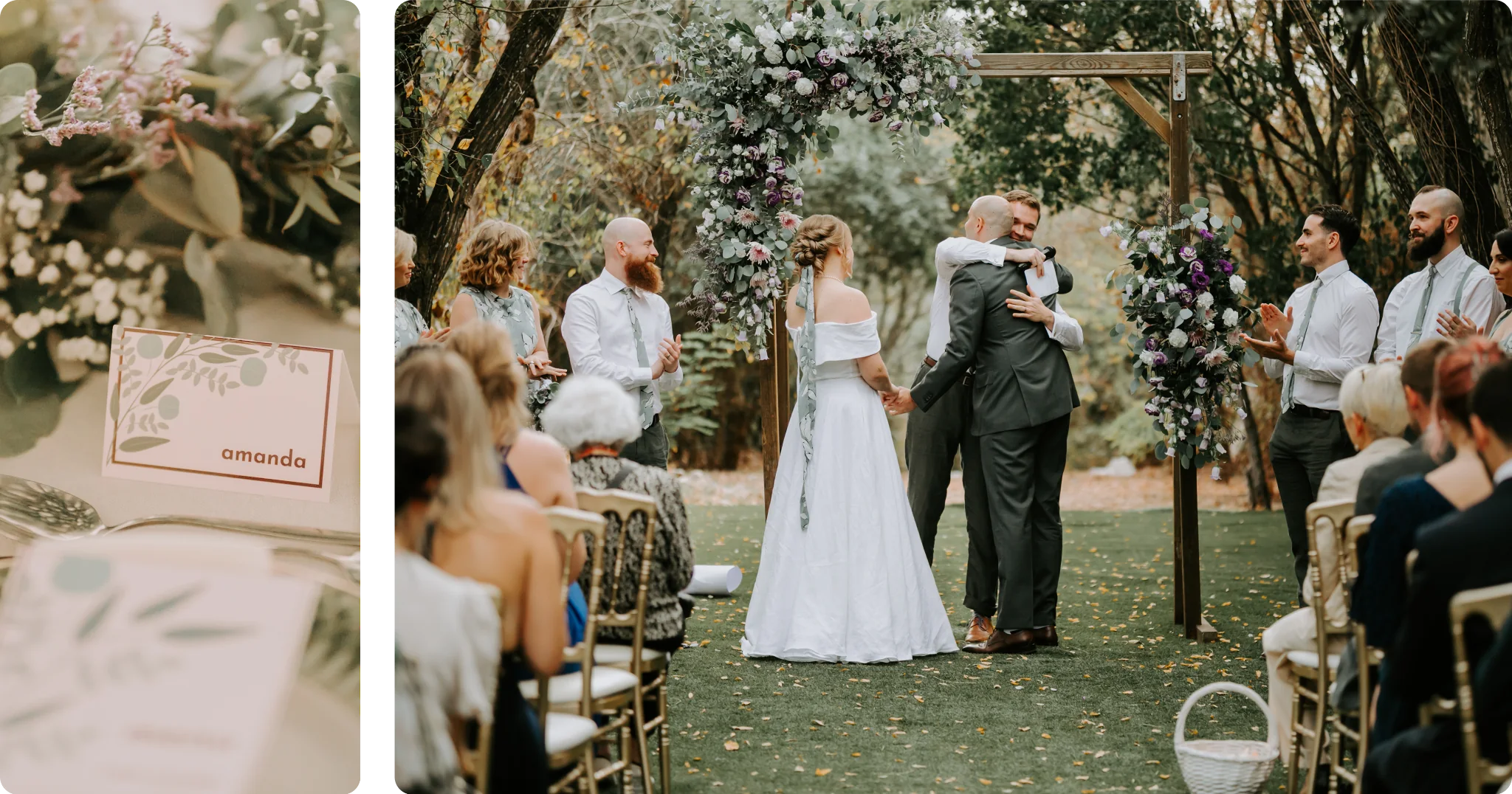
Printed materials
Menus, place cards, programmes, and a bingo card, all carrying the same typography, colour, and illustration language as the digital touchpoints.
Garments
Wedding dress, bridesmaids' dresses, and groom and bridal party ties, designed and produced as part of the same identity system rather than as a separate workstream.
Printed materials and garments on the day
The decisions
Defining the identity system before producing any individual deliverable
Designing outputs one by one would have meant re-making the same decisions repeatedly under deadline pressure, with no guarantee of coherence across formats. Defining typography, colour, layout rules, and reusable illustration elements first meant every subsequent decision had a framework to work within, so consistency was built in from the start rather than checked at the end.
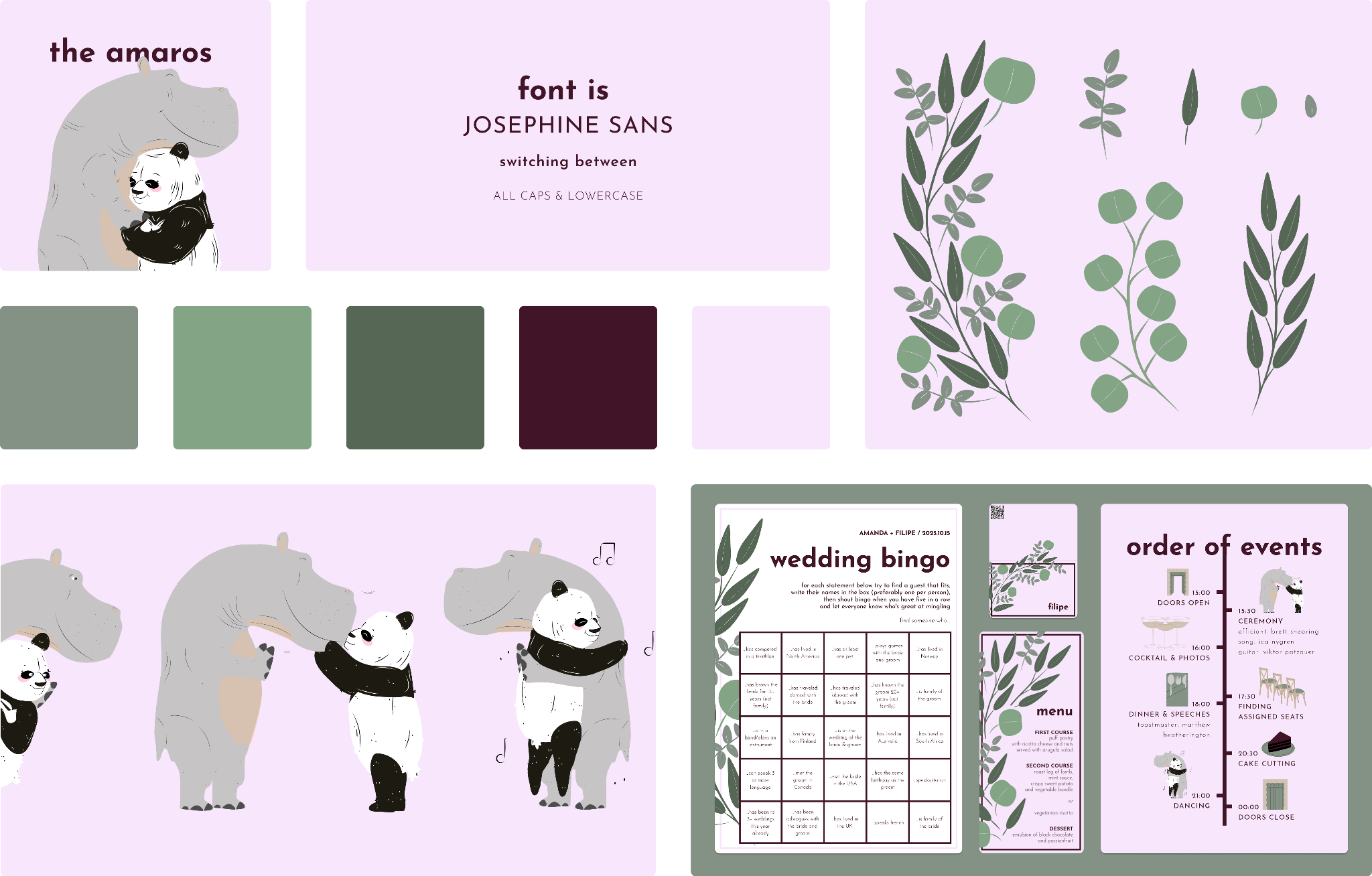
The identity system: colour palette, typography, and the hippo and botanical illustration elements used across every touchpoint
Treating garments as part of the same system
Attire is typically handled separately from print and digital, often by different people entirely. Keeping garments within the same identity system meant the visual language carried through to what people actually wore on the day, rather than sitting alongside it as a separate aesthetic decision.
Coordinating with an external developer and completing final design refinement
The website functionality was handed off to an external developer, so there was a risk of a gap between what was designed and what was built. Rather than accepting that as inevitable, final adjustments were made after development to bring the result back in line with the intended design.
The results
The identity held across all eleven touchpoints, from digital invitations to garments, despite shifting deadlines and format constraints that varied significantly between deliverables. Everything was delivered and used at the event.
The point
Getting eleven touchpoints across formats as different as a website, a printed menu, and a wedding dress to feel like one thing required defining the system before touching any of them. It's easy to skip that step and start producing instead, but coherence truly depends on what is set up at the beginning.